
The HECM Playbook: How Reverse Mortgage Payout Options Actually Work
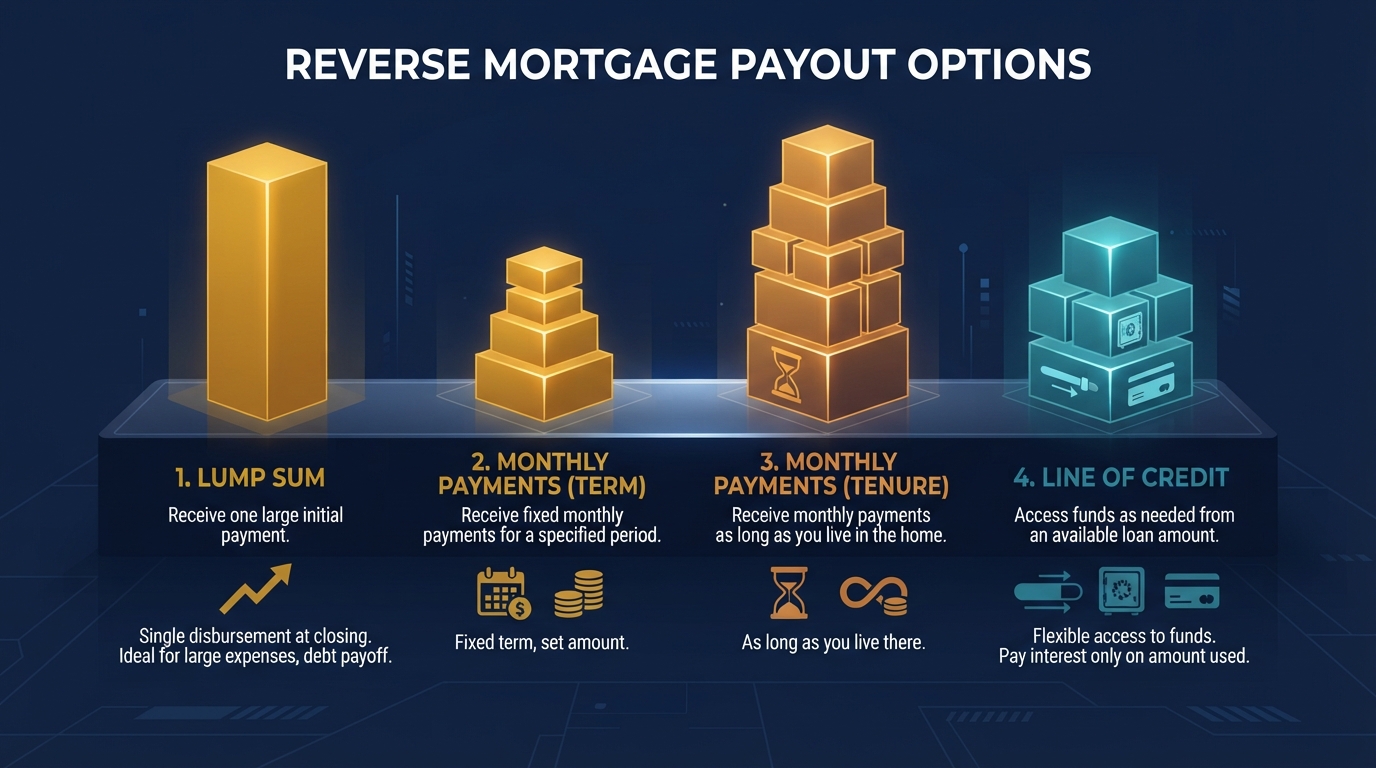
If you've heard of a reverse mortgage, you probably picture one thing: a lump sum check. That's true — but it's only one of four ways a HECM (Home Equity Conversion Mortgage) can pay you, and for most Metro Detroit retirees, it isn't even the best fit. As a licensed Mortgage Loan Officer in Michigan (NMLS #2284573), I walk retirees through these structures every week, and the option they end up choosing is rarely the one they assumed they'd need. Home Equity Strategy is Pillar Four of my six-pillar retirement framework — here's the deep-dive most people never get.
What a HECM Actually Is
A HECM is an FHA-insured reverse mortgage available to homeowners 62 and older. It's non-recourse — you or your heirs will never owe more than the home is worth, regardless of how the loan balance grows. You retain title throughout. Before closing, HUD requires an independent counseling session, which exists to make sure you understand the tradeoffs before you commit. None of that changes based on which payout option you choose — what changes is how and when you actually receive the money.
Four Payout Options — and Who Each One Fits
Lump Sum: A single draw at closing, typically at a fixed rate. Best for one specific, sizable need — paying off an existing mortgage or funding a major expense. Once drawn, there's no remaining line of credit growing in the background.
Tenure Payments: A fixed monthly payment for as long as you live in the home — for life, regardless of how long that turns out to be. This functions like a self-funded income stream from your own equity, similar in feel to a private pension.
Term Payments: The same fixed monthly structure as tenure, but for a set number of years you choose. This is where home equity strategy connects directly to Social Security: if you're delaying your claim from 62 or your full retirement age up to 70, a term payment can be structured to cover exactly that gap. Every year you delay claiming past full retirement age adds roughly 8% to your benefit up to age 70 — a term payment can fund those years without touching your investment accounts in a down market.
Line of Credit: You draw only what you need, and the unused balance grows over time at a rate tied to the loan — regardless of what home values do. Many retirees use this as a standby fund for healthcare costs or market downturns. Modified tenure and modified term options combine a smaller monthly payment with a standby credit line.
HECM for Purchase: The Downsizing Strategy Most People Miss
If downsizing is already part of your plan, HECM for Purchase (H4P) lets you use a reverse mortgage to buy your next home directly. Depending on your age, you typically put down roughly 45-60% of the purchase price, with the reverse mortgage covering the rest — and no monthly mortgage payment on the new home. The alternative — selling your current home and paying cash for the smaller one — ties up all of that equity in the new property. H4P lets you preserve more of it in savings or a line of credit instead.
What It Actually Costs and Requires
Eligibility requires being 62 or older with the home as your primary residence, plus HUD-approved counseling and a financial assessment of income, credit, and ability to cover property taxes and insurance (sometimes requiring a set-aside). Costs include an origination fee, mortgage insurance premium (roughly 2% upfront, 0.5% annually), and standard closing costs — typically financed into the loan rather than paid out of pocket. Because the loan is non-recourse, neither you nor your heirs will ever owe more than the home's value.
Frequently Asked Questions
Q: What's the difference between tenure and term payments on a HECM?
A: Tenure pays a fixed monthly amount for as long as you live in the home — for life. Term pays the same fixed monthly amount, but only for a set number of years you choose. Term is often used strategically to bridge income until Social Security is claimed at 70.
Q: Can the line of credit on a HECM run out or lose value?
A: The unused portion grows over time based on the loan's rate — it doesn't shrink, and its growth isn't tied to home values. It can only be reduced by draws you make against it.
Q: How much down payment does HECM for Purchase require?
A: Typically 45-60% of the purchase price, depending on your age at closing — older borrowers generally need a smaller down payment.
Q: Does a HECM affect what I leave to my heirs?
A: Yes — it reduces the equity remaining in the home. However, heirs can always sell the home and pay off the loan balance, keeping any remaining equity. The loan is non-recourse, so they will never owe more than the home is worth.
Q: Is Janine Davis licensed to originate HECMs in Michigan?
A: Yes — Janine Davis holds a Michigan Mortgage Loan Officer license, NMLS #2284573, and can walk through the actual numbers for your home and goals.
Ready to Explore Your Home Equity Options?
A reverse mortgage isn't one option — it's four, plus a purchase strategy most retirees never hear about. Book your free home equity review at LifestyleSafety.com, call (313) 450-9543, or pick up 'You Worked Too Hard to Run Out of Money.' AEP opens October 15 — Medicare appointments start October 1, book early.
Book Your Free Home Equity Review
See how your home equity fits into your complete retirement plan — all six pillars, one conversation.
Book Your Free Review