
The Social Security Earnings Test: What Michigan Retirees Working Part-Time Need to Know
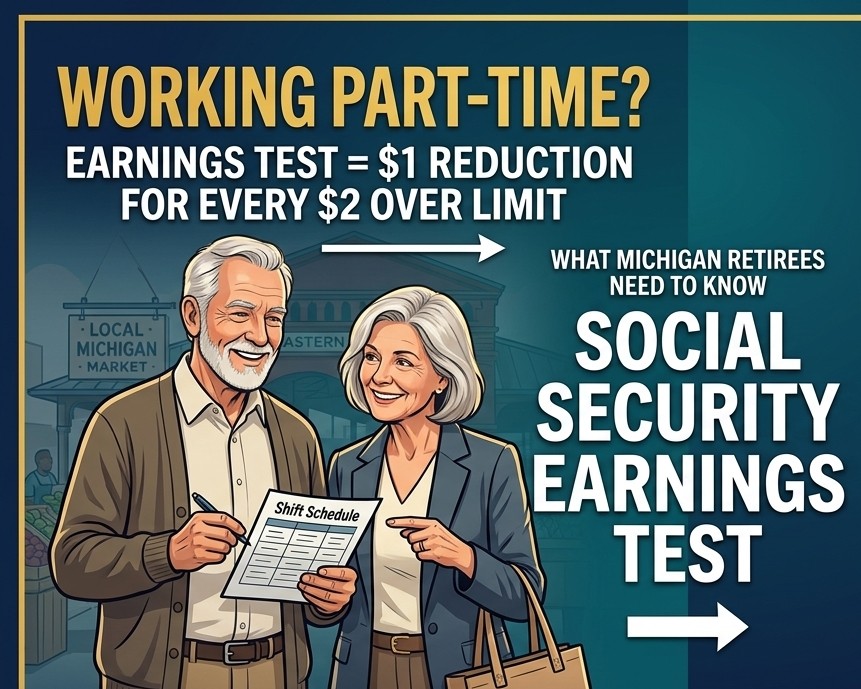
If you claimed Social Security before your Full Retirement Age and you're still bringing in income from work — a part-time job, a second career, consulting — there's a federal rule that can reduce your monthly check. It's called the Social Security earnings test, and it catches a lot of Metro Detroit retirees off guard, usually the moment their first reduced payment shows up. Here's exactly how it works for 2026, what actually counts against the limit, and the part almost nobody explains correctly.
What Is the Social Security Earnings Test?
If you claim Social Security retirement benefits before your Full Retirement Age (67 for most people retiring today) and continue working, Social Security can temporarily withhold part of your benefit once your work earnings cross an annual limit. This rule only applies before Full Retirement Age. The month you reach it, the earnings test disappears completely — you can earn any amount from work with no reduction at all.
The 2026 Earnings Limits
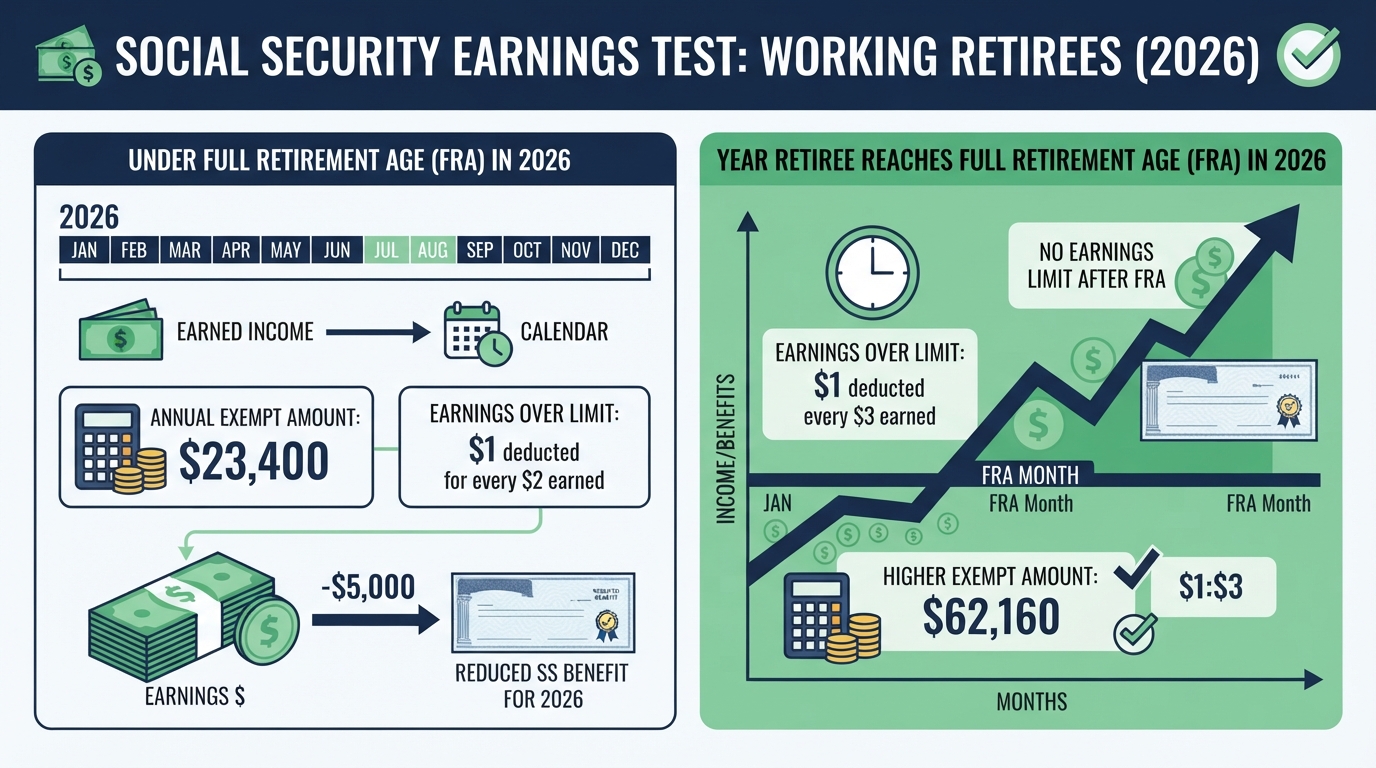
For 2026, if you'll be under Full Retirement Age for the entire year, the earnings limit is $24,480. Above that amount, Social Security withholds $1 in benefits for every $2 you earn over the limit.
If you're reaching Full Retirement Age sometime during 2026, a higher and more generous limit applies: $65,160, counting only earnings from January through the month before you reach Full Retirement Age. Above that limit, only $1 is withheld for every $3 earned — a much smaller reduction. Starting the month you actually reach Full Retirement Age, the earnings test stops applying entirely, regardless of how much you earn.
What Counts as Earnings (and What Doesn't)
The earnings test applies only to income from work — wages from a job or net earnings from self-employment. It does not apply to pension income, 401(k) or IRA withdrawals, investment income, rental income, or annuity payments. If your income in retirement comes primarily from those sources rather than a paycheck, the earnings test simply doesn't apply to it. This distinction matters a great deal for planning: two retirees with identical total income can have very different outcomes depending on whether that income comes from work or from savings and investments.
The Part Almost Nobody Explains: Withheld Benefits Come Back
This is the detail that changes how you should think about the earnings test. Money withheld under this rule isn't lost forever. When you reach Full Retirement Age, Social Security recalculates your benefit amount and credits you for the months that were withheld — which permanently increases your monthly payment going forward. In other words, this functions more like a temporary hold than a true penalty. That doesn't mean it's irrelevant — it absolutely affects your cash flow while you're still working — but it shouldn't be the deciding factor against working if the income is otherwise worthwhile to you.
That said, for some people, the smarter move is delaying the Social Security claim itself rather than claiming early and losing part of it to the earnings test in the meantime. Every year you delay claiming past Full Retirement Age (up to age 70) increases your benefit by roughly 8% annually — a permanent increase, not a temporary hold. If you're planning to keep working, it's worth running both scenarios before deciding when to claim.
Frequently Asked Questions
Q: Does the earnings test apply after I reach Full Retirement Age?
A: No. Once you reach your Full Retirement Age, the earnings test no longer applies at all — you can earn any amount from work with zero reduction to your Social Security benefit.
Q: What is the 2026 earnings limit if I'm under Full Retirement Age all year?
A: $24,480 for 2026. Above that amount, Social Security withholds $1 in benefits for every $2 you earn over the limit.
Q: What if I'm reaching Full Retirement Age sometime in 2026?
A: A higher limit applies: $65,160, counting only earnings before the month you reach Full Retirement Age. Above that, only $1 is withheld for every $3 earned, and the test stops entirely the month you reach Full Retirement Age.
Q: Is money withheld under the earnings test lost permanently?
A: No. Social Security recalculates your benefit at Full Retirement Age and credits you for the months withheld, which raises your ongoing monthly payment. It affects your cash flow in the short term, but it is not a permanent loss.
Q: Should I delay claiming Social Security if I plan to keep working?
A: It depends on your full financial picture, but it's worth analyzing. Delaying your claim past Full Retirement Age increases your benefit by roughly 8% per year, up to age 70 — a permanent increase rather than a temporary withholding. A Registered Social Security Analyst can run both scenarios against your actual numbers.
Ready to Find Out Where You Stand?
Working while collecting Social Security early isn't a mistake — but it does require knowing the actual rule, not the version that gets passed around secondhand. Book your free RSSA analysis to see exactly how the earnings test applies to your situation, and whether claiming early or delaying makes more sense given your work plans. LifestyleSafety.com or call (313) 450-9543. AEP opens October 15 — I take Medicare review appointments starting October 1, so if you need both a Social Security analysis and a Medicare review this fall, let's do both in one conversation.
Book Your Free Social Security Analysis
See exactly how the earnings test applies to your situation — and whether claiming early or delaying makes more sense.
Book Your Free Review